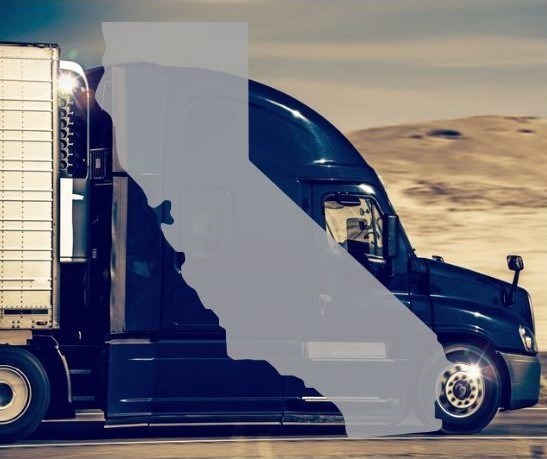
If members sometimes wonder why ICSA focuses a lot on truck operations in California, our experience has shown that, unlike Las Vegas, what happens in California rarely stays in California! Sooner or later, its anti-truck policies find their way into laws or rules in other states.
In addition, many of our members are based in, or travel through, California. That’s why we were happy to see that nearly half the states have asked the Environmental Protection Agency (EPA) to deny California a waiver to force truckers based outside California to conform to its radical Advanced Clean Fleets (ACF) rule.
For over 50 years, California has had authority under the federal Clean Air Act to set its own emission standards for cars and trucks, but each change in California standards requires a waiver from EPA. ACF, the most onerous of any California trucking proposal, would eliminate the sale and use of diesel-powered trucks anywhere in the state.
Any trucking company with 50 or more vehicles or $50 million in gross annual revenue – regardless of where they are based - must begin replacing their fleets with electric rigs in 2025 to operate in California.
“No worries!” you may say. “That won’t affect me or my business!”
On the contrary, it’s just a matter of time before California’s environmental bureaucrats chip away at smaller and smaller fleets until it’s just you against them!
Already the California Air Resources Board (CARB) is poised to prohibit drayage fleets serving California ports from replacing the trucks they currently operate with diesel-powered vehicles. For more information about CARB, click here to read ICSA’s CARB white paper.
On August 14, EPA held a virtual hearing on whether it should issue the waiver that would allow CARB to move forward with the ACF rule. During 12 hours of testimony, CARB officials, environmental organizations and other anti-truck entities argued that the ACF meets the criteria for an EPA waiver.
Trucking industry representatives, on the other hand, pointed out that zero-emission trucks are costly, have limited range, and lack a statewide charging infrastructure, which makes ACF implementation “technologically infeasible.”
The forthcoming election creates a sense of urgency to California to get the waiver done before November 5. The previous Trump administration did not support the California waiver request and is expected to oppose it again. A spokesperson for EPA declined to say when a decision would be made.